

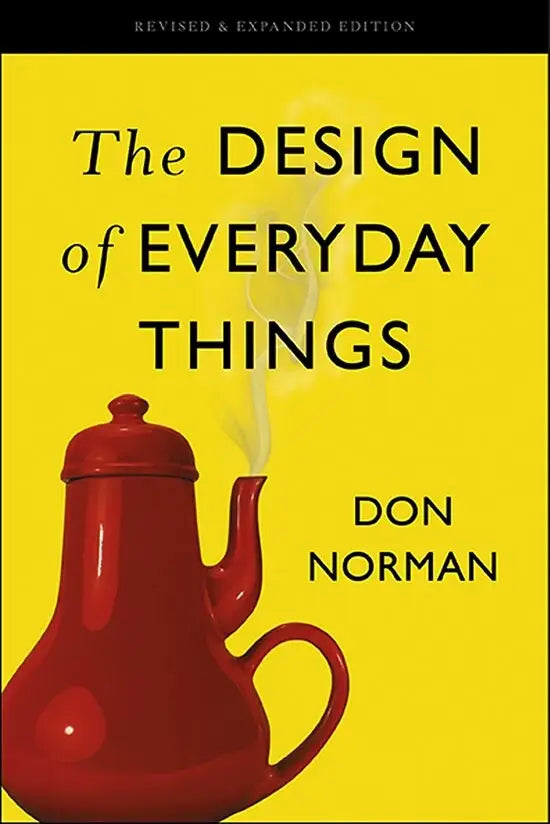


Even the smartest people can feel uncertain when using everyday objects, such as operating a light switch, a stove, or opening a door. According to this book, this is not due to ourselves, but to poor design that ignores the user and cognitive principles.
Overview of the problems
- Unclear and hidden controls
- Arbitrary connections between controls and functions
- Lack of feedback and aids
- Unjustified demands on memory
The solution
The Design of Everyday Things shows that good and usable design is possible with simple rules:
- Make functions visible
- Use natural relationships between function and control
- Apply smart constraints
The goal is to guide users effortlessly to the right action, at the right moment.
Application and relevance
This insightful analysis by cognitive scientist Don Norman emphasizes the importance of excellent design for influencing consumer behavior. This fully revised edition, with a new introduction, is a valuable guide for anyone who wants to understand why some products are liked and others frustrate.
Language and usage
The book is available in Dutch and suitable for a wide audience, including higher education, professionals, and self-study. The language level is intermediate to advanced (B2–C1).
Intertaal is your reliable supplier and guarantees fast delivery of this valuable learning tool.