

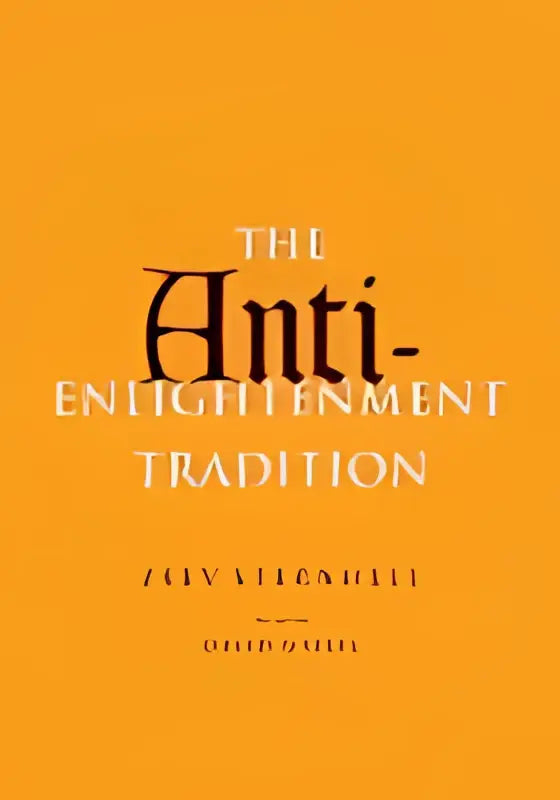


In this masterful historical study, Zeev Sternhell, an internationally renowned Israeli political scientist and historian, offers a controversial new perspective on the downfall of democracy and the rise of radical nationalism in the twentieth century.
Content and background
Sternhell places the origin of these developments as early as the eighteenth century, with the rise of the Anti-Enlightenment. This movement, originally defined by Friedrich Nietzsche, criticized rationalism and rejected the principles of natural law and human rights.
Key features
- The Anti-Enlightenment developed parallel to, but independently of, the Enlightenment.
- Thinkers such as J. G. Herder and Edmund Burke are considered by Sternhell to be the founders.
- The movement undermined the foundations of modern liberalism and contributed to the rise of fascism.
- The consequences of this manifested in the European catastrophes of the twentieth century.
Application
This teaching material is suitable for use in higher education, research, and self-study, with a focus on politico-historical contexts.
Language and level
Dutch, suitable for interested parties and professionals with an advanced language level (C1–C2).
Intertaal is your reliable supplier, guaranteeing fast delivery.