
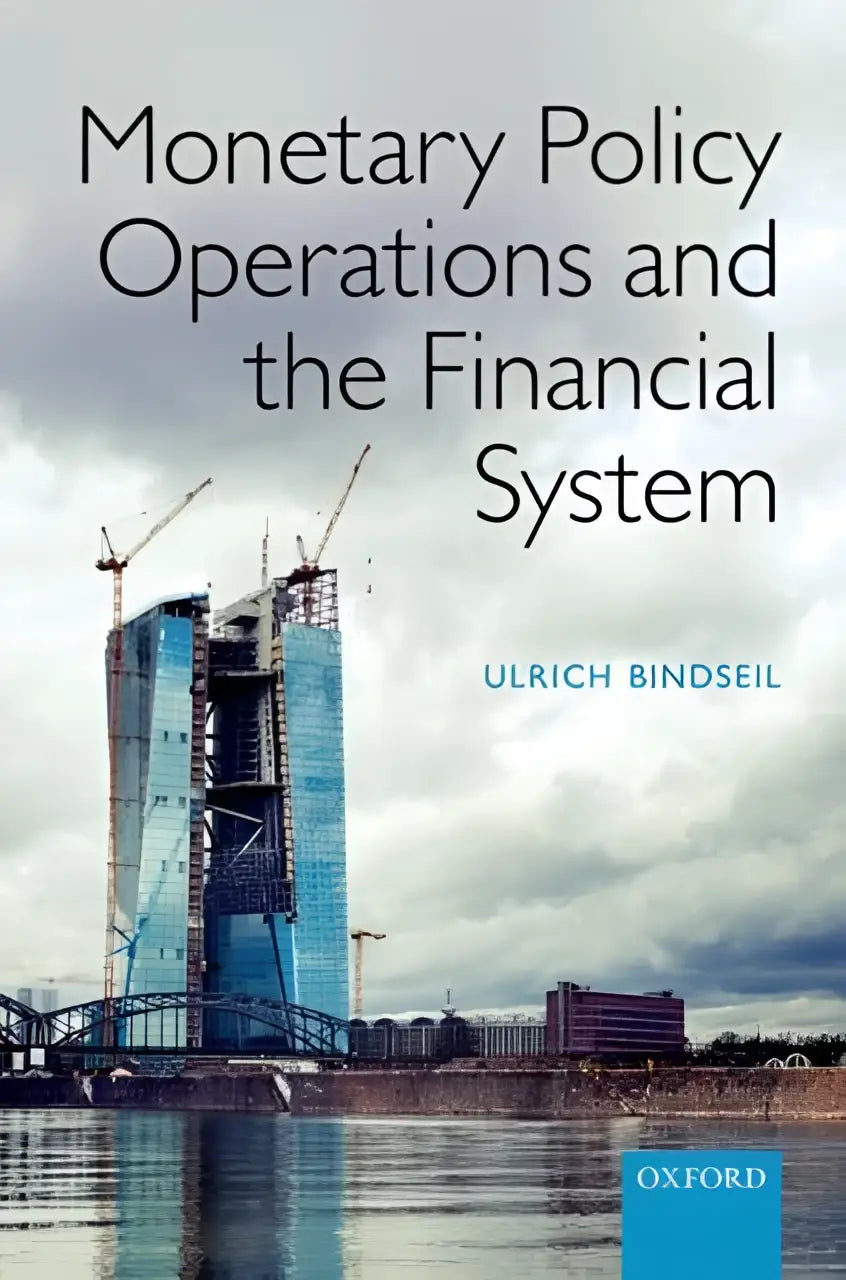

This textbook by Ulrich Bindseil provides an in-depth analysis of monetary policy operations by central banks. It covers the implementation of monetary policy through market operations in normal times and during crises and discusses the role of central banks in ensuring financial stability.
Contents
The book begins with an overview of traditional monetary policy operations, including open market operations, standing facilities, reserve requirements, and the collateral framework. It then explains the mechanics of financial crises and outlines what measures central banks take when markets and banks are disrupted. In addition to the need for non-conventional policy operations, it also addresses risks such as moral hazard and the increased risk tolerance of central banks. This handbook draws lessons from recent crises and assesses how a robust framework for future policy operations can be shaped to prevent financial crises.
Monetary policy operations are generally seen as practice-oriented, but they also deserve a theoretical foundation. This book contributes to a better understanding of policy choices and the way central banks work in practice.
Product information
- Author: Ulrich Bindseil (Director General Market Operations, European Central Bank)
- Publisher: Oxford University Press
- Publication date: 2014-09-11
- Number of pages: 338
- ISBN: 9780198716907
- Theme: Finance and the finance industry
- BISAC: BUSINESS & ECONOMICS / Finance / General
About the author
Ulrich Bindseil has been Director General Market Operations at the European Central Bank since 2012. Previously, he worked at the Deutsche Bundesbank and the European Monetary Institute. He is also a university lecturer at Technische Universität Berlin. His publications focus on central bank market operations, risk management, and European governance.