
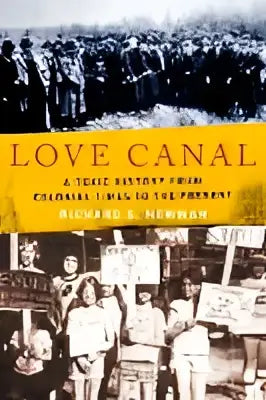


In the spring of 1978, residents of Love Canal, a suburb of Niagara Falls (NY), protested against a leaking landfill with toxic waste. This sixteen-hectare site contained 100,000 barrels of chemical waste and lay beneath their homes, school, and gardens. The Love Canal movement represented a new form of environmental rights, focused on justice rather than just nature conservation.
Key Initiatives
In the early 1980s, hundreds of local activists, often housewives-turned-activists, forced two major actions from politicians and companies:
- Government relocation of families from Love Canal
- Cleanup of the landfill by government and industry
Additionally, their efforts led to the introduction of the Superfund law at the federal level and 'Right to Know' legislation at the state level. Similar citizen movements emerged worldwide as a result.
Historical Context and Impact
Richard S. Newman's book places Love Canal in a historical context of five centuries. The conflicts began when French explorer Rene Lasalle developed industrial plans on Iroquois land. In the 18th and 19th centuries, the area changed due to European and American entrepreneurs, including William Love, who wanted to realize an industrial complex at the end of the 19th century. Although his plan failed, the construction of the canal began, which later led to large-scale industrial growth, also by the Hooker Electrochemical Corporation that dumped the waste.
Through the course of commercialization, industrialization, and technological innovations, an ecological disaster area and an international environmental rights movement emerged in the 1970s.
Target Audience and Language Level
This book is suitable for self-study, education, and professionals interested in environmental rights, history, and sociology. The material is available in Dutch and suitable for language level C1–C2.
Intertaal is your reliable supplier for this learning material, with fast delivery guaranteed.