
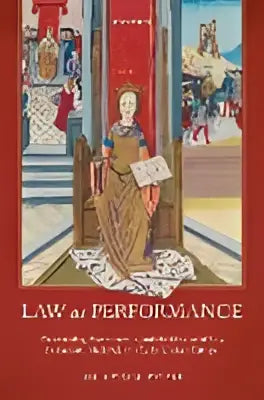


Overview of the book "Law as Performance"
Tirades against legal theatricality are almost as old as the law itself. At the same time, there is the age-old claim that law must not only be applied but also visibly performed. Law as Performance explores this history of legal performance and spectatorship in the early modern period.
Contents
The book considers law not merely as a collection of rules or doctrines, but as an expressive act that creates the law. It highlights performances in various contexts, such as:
- urban arenas
- courtrooms and judges' chambers
- markets
- scaffolds
- and streets
Additionally, it analyzes diverse sources that confronted these performances, including legal codes, treatises by jurists, trial records, manuals for lawyers, execution stories, rhetoric books, and images. This rediscovers a long and often overlooked tradition of jurisprudential reflection on law as performance.
Significance
This tradition generated not only a varied poetics and politics of legal performance, but also determined the fundamental norms that distinguish law from theater. Where law stood for rational consideration, rules, and disciplining, theater symbolized artificiality and entertainment. Yet the book shows that even theatrical legal performances are essential for the functioning of the law: for forming legal actors, persuasion, deterrence, and the exercise of jurisdiction.
Language and applicability
Although this book focuses on legal historiography and theory, it is suitable for academic education, research, and self-study in legal and linguistic contexts. The language level is high and requires advanced proficiency in Dutch.
Intertaal is your reliable supplier and guarantees fast delivery of this valuable teaching aid.