
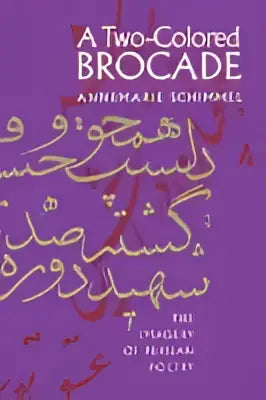


Annemarie Schimmel, one of the leading authorities on Persian literature, offers a clear and comprehensive overview of the refined system of rhetoric and imagery used by poets in Iran, the Ottoman Empire, and Muslim India.
Content and Themes
Schimmel explains how these images have been developed and adapted over the centuries to changing circumstances within the Muslim world. Persian poetry does not strive for spontaneity or personal expression, but is based on fixed conventions such as prosody, rhyme, and verbal instrumentation. Every verse line is seen as a perfectly formed, multifaceted gem that reflects the relationship between everyday reality and the transcendent.
The characteristic verse form of the ghazal, a series of rhyming couplets, serves to veil the poet's true intentions in traditional imagery. Schimmel emphasizes that Persian poetry in terms of structure resembles medieval European verse forms more than Western poetry since the Romantic era.
Structure and Meaning
Because Persian poetry is not narrative or dramatic in nature, its strength lies in a carefully constructed 'architectural' design, where every imagery fits precisely into a coherent pattern. Central is the transformation of the world into a web of symbols, deeply rooted in Islamic culture.
Suitability and Language
This work is eminently suitable for study and in-depth self-reflection on Persian poetry and culture. The material is available in Dutch and suitable for advanced language users and those interested at an academic level.
Intertaal is your reliable supplier, guaranteeing fast delivery so that you have immediate access to this valuable resource.